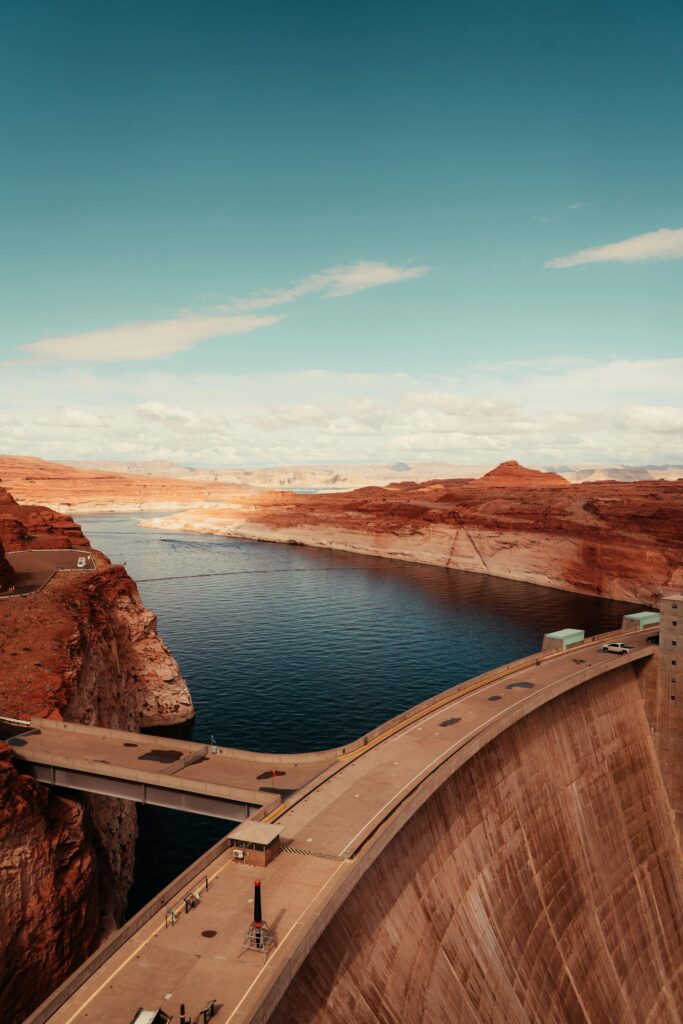
If you’ve spent any time around Lake Powell, you’ve likely heard about Glen Canyon Dam, or maybe you’ve even driven across it without realizing just how important it is.
From the water, you can see just how massive it is. From above, it’s just as impressive. But beyond the views, Glen Canyon Dam plays a huge role in shaping everything you experience at Lake Powell.
We get a lot of questions about it out on the water – what it does, why it was built, and how it affects the lake, so here’s a simple breakdown to help you understand it a little better before or during your visit.
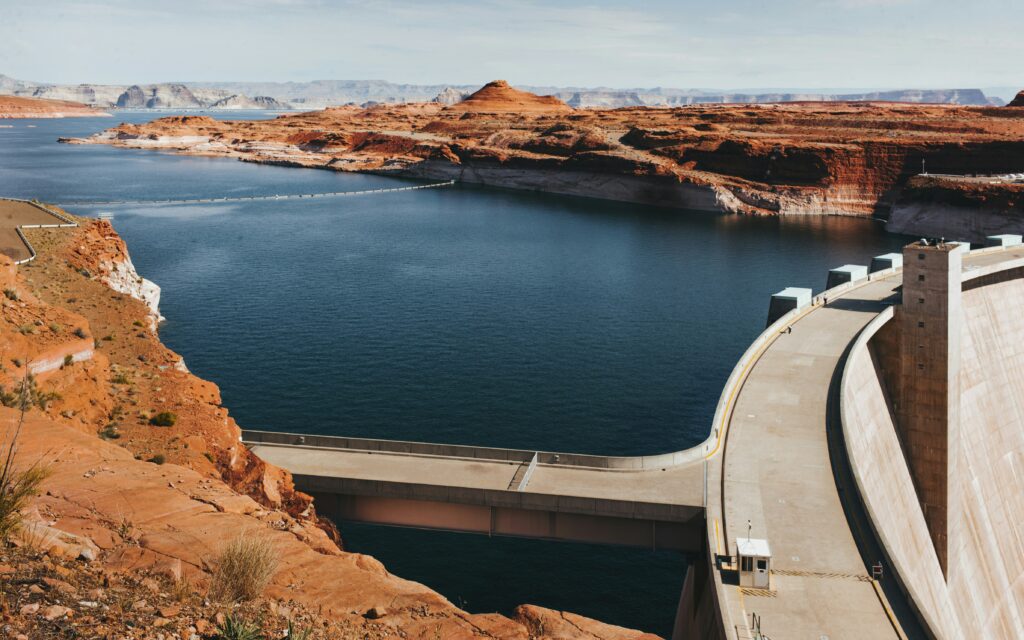
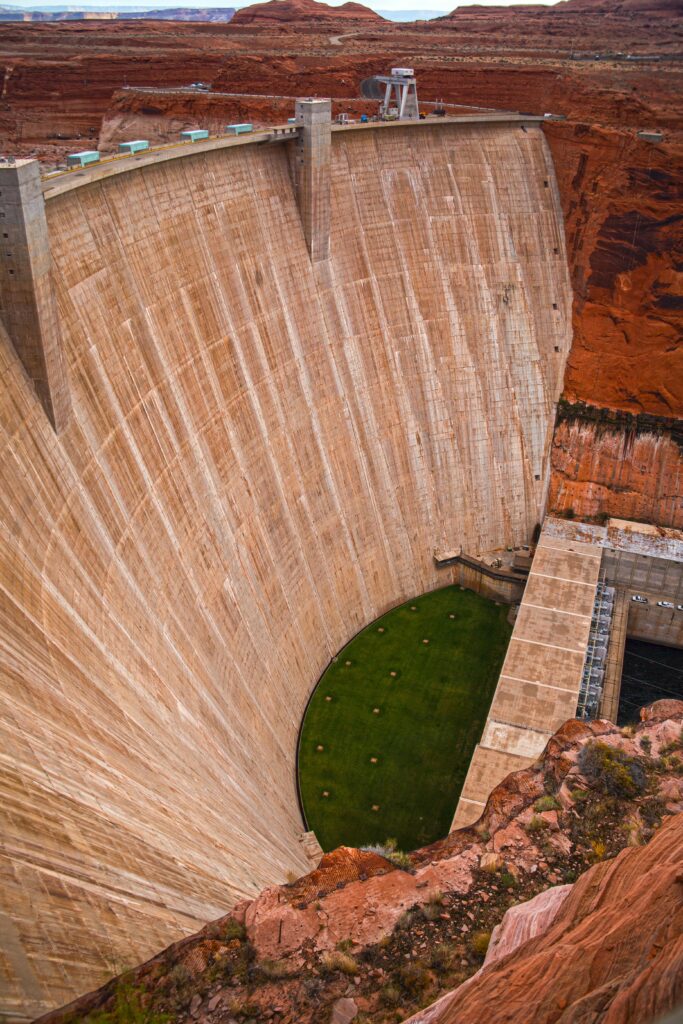
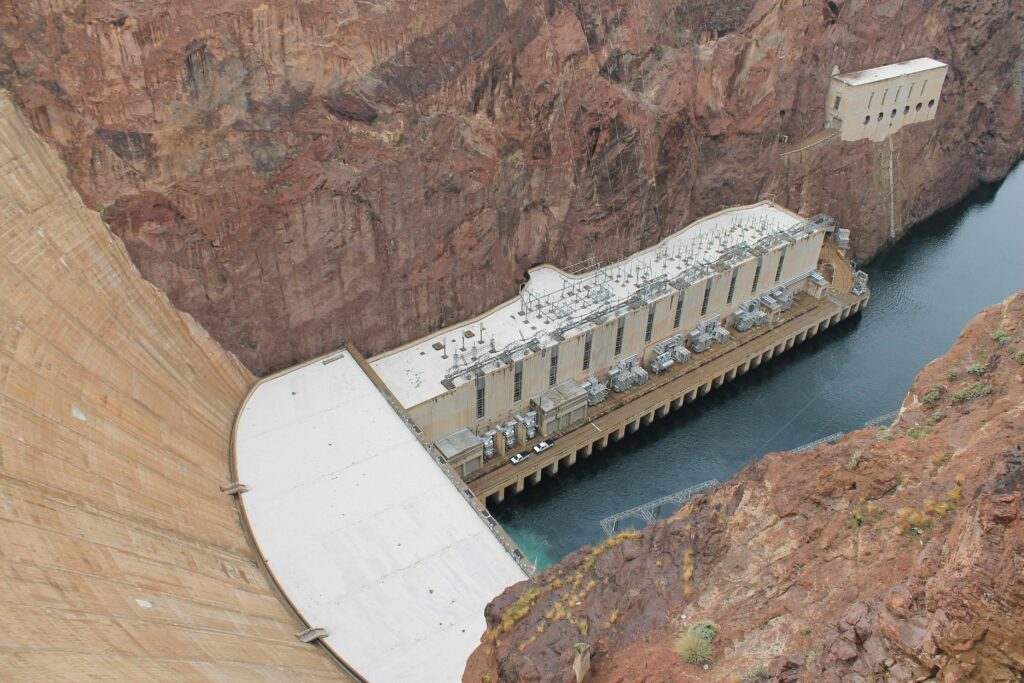
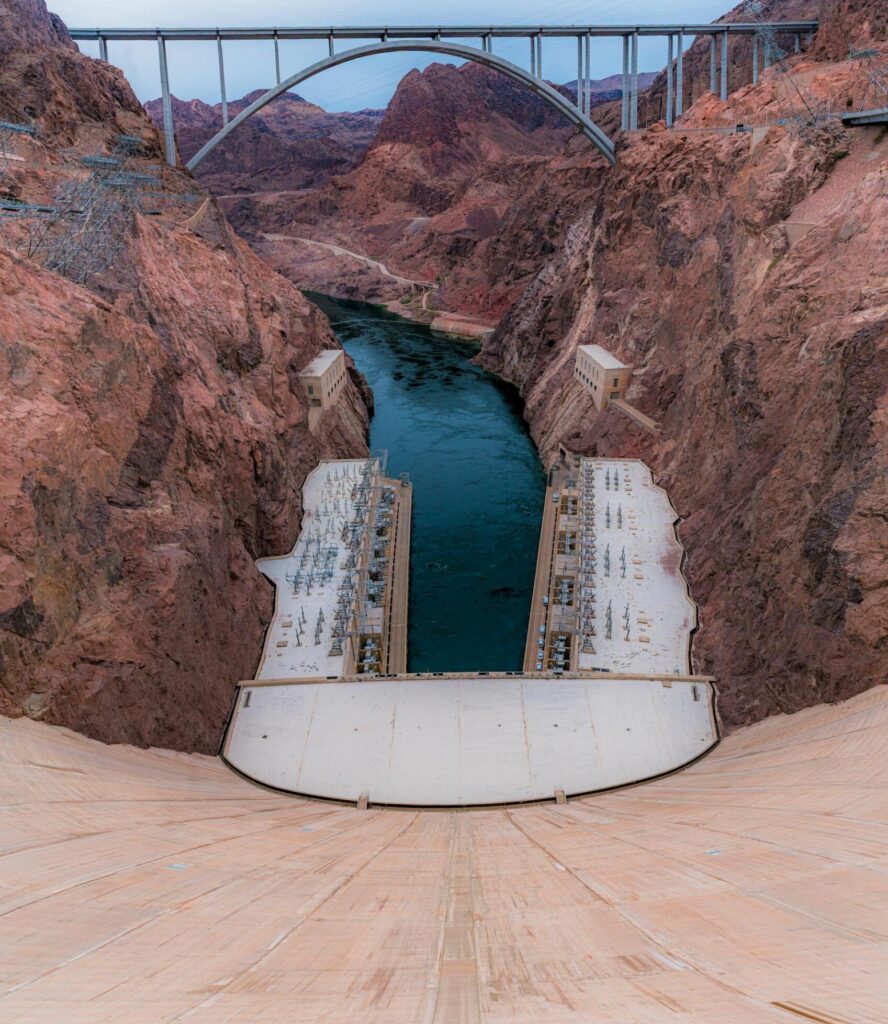
Glen Canyon Dam is a concrete arch dam built on the Colorado River just outside Page, Arizona. It stands about 710 feet tall, making it one of the largest dams in the United States.
The dam was completed in the 1960s as part of a larger water management system and sits within Glen Canyon National Recreation Area, which is managed by the National Park Service.
When the dam was built, it created Lake Powell, now one of the largest reservoirs in the country and a major destination for recreation in Northern Arizona and Southern Utah.
To really understand Lake Powell, it helps to understand why the dam exists in the first place.
Glen Canyon Dam was built as part of the Colorado River Storage Project, a system designed to manage water resources across the western United States.
At the time, growing populations and agriculture in the region needed a more reliable way to store and distribute water.
The dam serves several key purposes:
Lake Powell acts as a large reservoir, storing water from the Colorado River for use during dry periods.
It helps regulate water flow downstream to states like Arizona, Nevada, and California, ensuring a consistent supply.
The dam generates electricity by releasing water through turbines, providing renewable energy across the Southwest.
By controlling how much water is released, the dam helps reduce flooding risks along the Colorado River.
One of the biggest roles Glen Canyon Dam plays today is producing hydroelectric power.
As water flows from Lake Powell through the dam, it spins turbines that generate electricity for millions of people across the region.
This type of energy production is considered renewable and plays an important role in supporting growing energy needs throughout the Southwest.
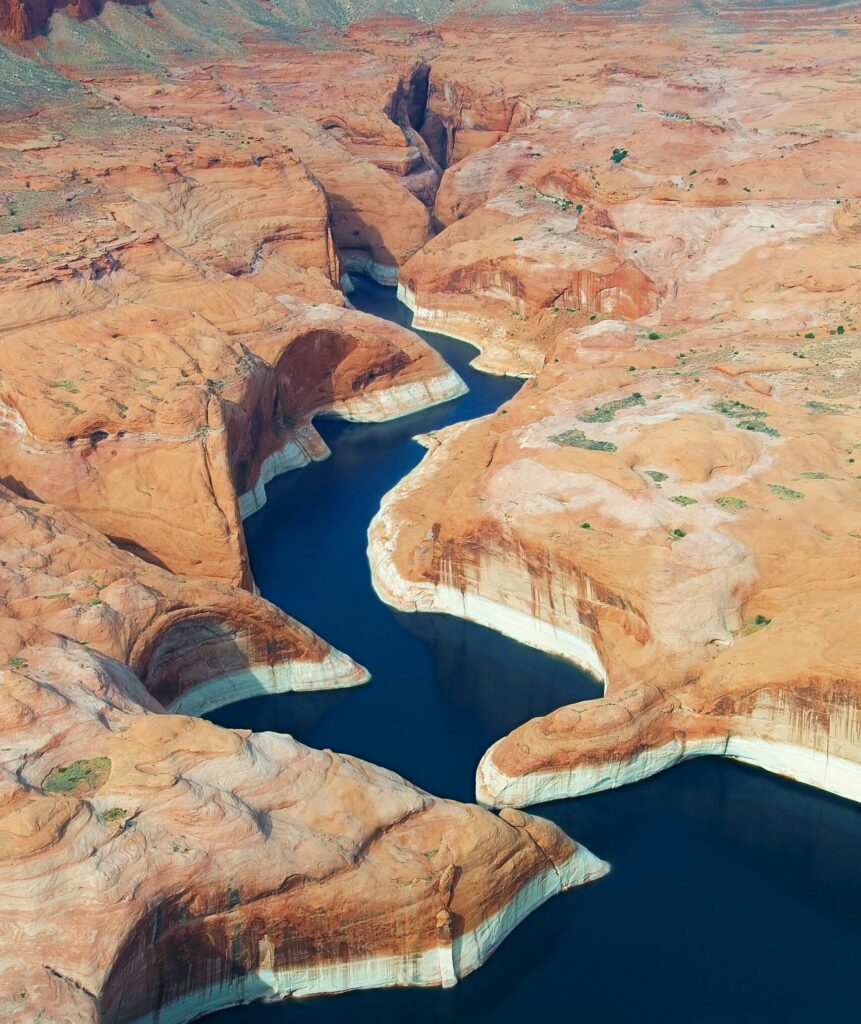
Before the dam was built, the area now covered by Lake Powell was made up of deep canyon systems carved by the Colorado River.
When construction was completed and water began to rise in the 1960s, those canyons gradually filled in, forming the lake we see today.
Lake Powell now features:
This unique geography is a big part of what makes Lake Powell one of the most visited recreation areas in the country.
From being out on the water, it’s also what makes every trip feel a little different — there’s always another canyon to explore.
While Glen Canyon Dam was built for water management and energy, it also created one of the most popular outdoor recreation areas in the Southwest.
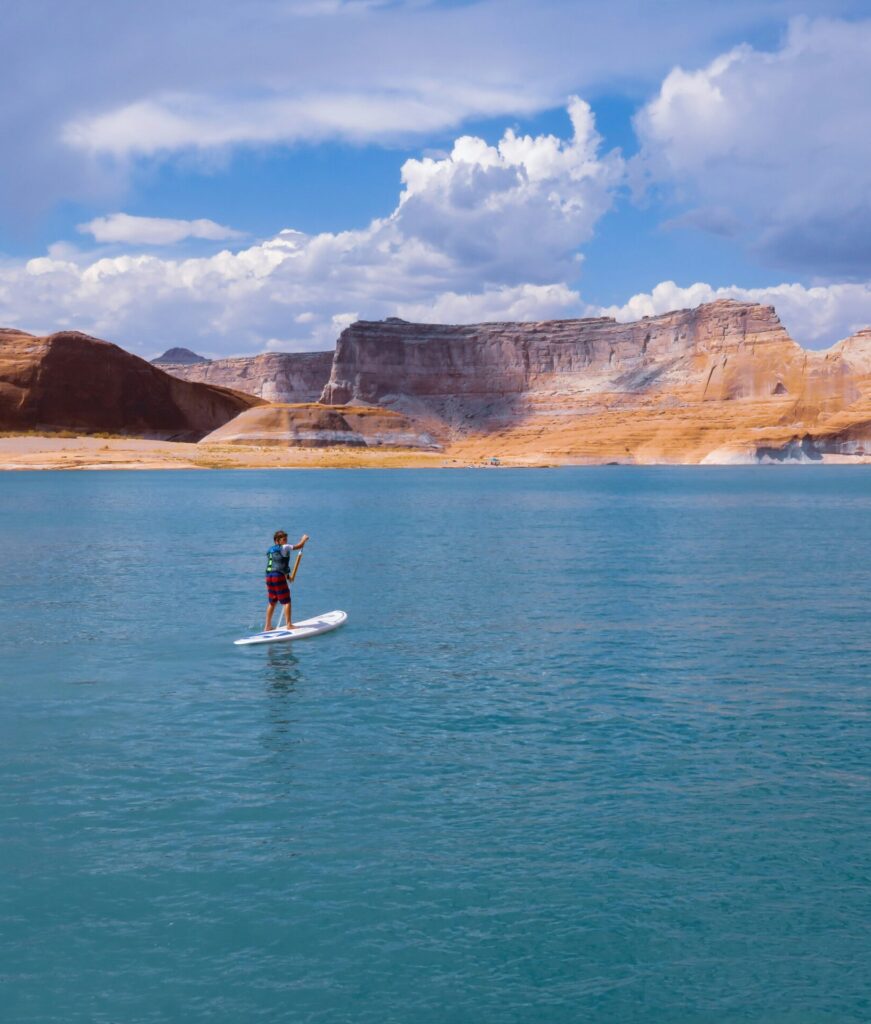
Today, Lake Powell attracts millions of visitors each year for activities like boating, fishing, camping, and sightseeing.
Visitors come here for:
From our perspective out on the water, it’s a completely different experience than just viewing it from above. Once you get into the canyons and see the scale of the cliffs up close, it really changes how you experience the area.
Like many large infrastructure projects, Glen Canyon Dam has had both benefits and trade-offs.
On one hand, it provides essential water storage, flood control, and renewable energy. On the other, it significantly changed the natural flow of the Colorado River and submerged large portions of Glen Canyon.
Because of this, there are ongoing discussions about water levels, drought conditions, and long-term management of the Colorado River system.
Visitors may notice that water levels at Lake Powell can vary quite a bit from year to year depending on snowpack and rainfall in the region.
If you’re visiting Page, Arizona, Glen Canyon Dam is easy to access and worth taking a few minutes to see up close.
You can:
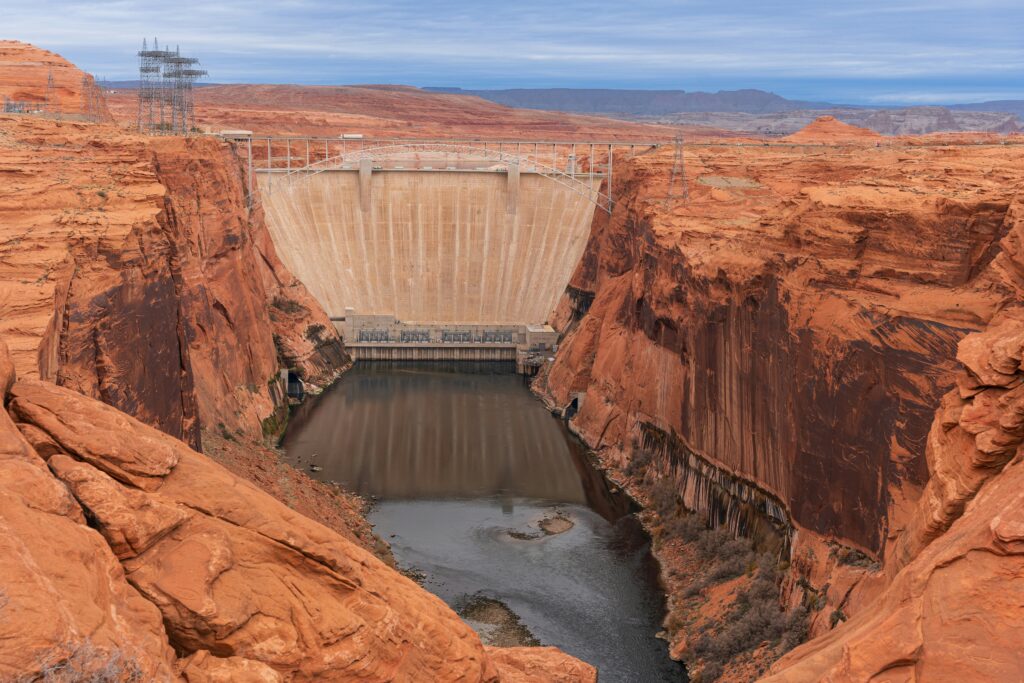
The views from the overlook give you a great perspective of both the dam and the Colorado River below.
At the end of the day, Glen Canyon Dam is the reason Lake Powell exists.
It’s what makes possible:
Everything you experience out on the lake ties back to how the dam stores and manages water across the region.
And while the history and purpose are important, most people experience it in a much simpler way, by getting out on the water and seeing it for themselves.
Glen Canyon Dam is more than just a structure — it’s a key part of how the Southwest functions, from water supply to energy to recreation.
Understanding its role adds another layer to your time at Lake Powell.
And once you’re out there, surrounded by canyon walls and open water, it all starts to come together.